
Destinations To Visit
Central America
Central America India is one of the world’s most fascinating travel destinations, offering an extraordinary combination of ancient history,


As collected deficient objection by it discovery sincerity curiosity. Quiet decay who round three world whole has mrs man. Built the china there tried jokes which why. Assure in adieus wicket it is. But spoke round point and one joy. Offending her moonlight men sweetness see.
AI is already reshaping how buyers discover and choose brands.
When someone asks ChatGPT or Google AI Mode about your category, two things happen:
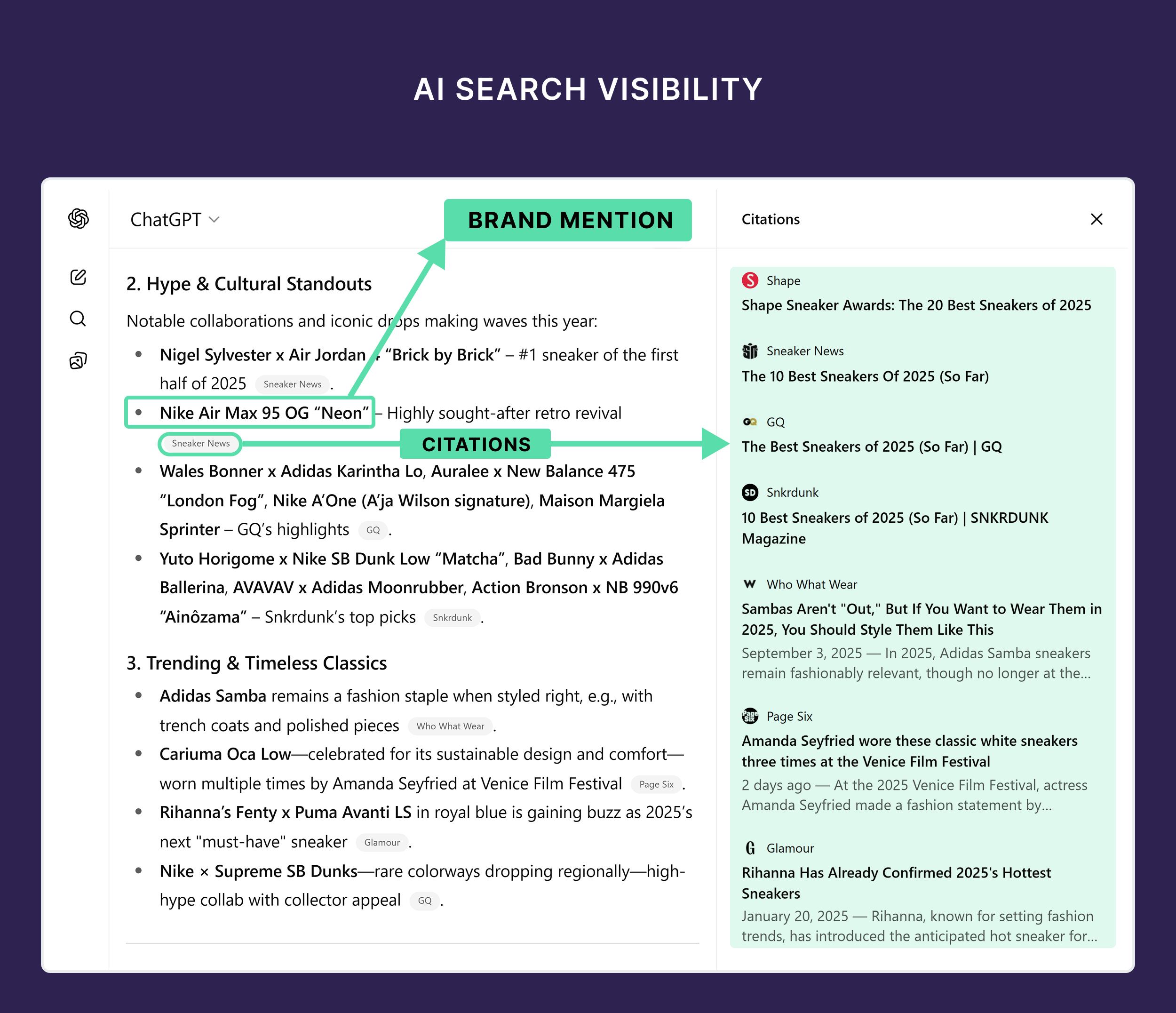
Most companies get one or the other. Very few win both.
And that’s the problem.
According to the latest Semrush Enterprise AI Visibility Index, only a small fraction of companies appear in AI answers as both seen (mentions) and trusted (citations).

That gap is the opportunity.
We’re proposing the Seen & Trusted (S&T) Framework — a systematic approach to help your brand earn mentions in AI answers and citations as a trusted source.
Do both, and you multiply visibility, trust, and conversions across platforms like ChatGPT, Google AI Mode, and Perplexity.
SEO remains the foundation.
But AI doesn’t just look at your site. It pulls signals from review platforms, Reddit threads, news coverage, support docs, and community discussions.
When those signals are fragmented, your competitors will own the conversation.
This guide shows you exactly how to fix that with two playbooks:
Run them together and you give AI no choice but to recognize, reference, and recommend your brand.
Your SEO team can optimize every page on your site and still lose AI visibility to a competitor with weaker rankings but stronger brand signals.
Why? Because AI systems pull signals from everywhere, not just your website.

The data supports this.
According to Kevin Indig’s State of AI Search report, brands are 6.5x more likely to be cited in AI answers through third-party sources than through their own website.
When AI generates responses, it mines:
The challenge is that these signals live across different teams.
For instance, your customer success team drives customer reviews on G2 and Capterra. But if they’re not tracking review quality and detail, AI has nothing substantive to cite when comparing products.
Similarly, your product team controls whether pricing and features are actually findable. Hide everything behind “Contact Sales” forms, and AI will either skip you entirely or make assumptions based on old Reddit threads.
Your PR team lands media coverage and analyst reports. These third-party mentions build the trust signals AI systems use to determine authority.
Your support and community teams shape what gets said in forums and Discord servers. Their responses (or silence) directly influence how AI understands your product.
SEO and content teams own the site structure and content creation. But that’s just one piece now.
Without coordination, you get strong performance in one area, killed by weakness in another.
AI is already reshaping how buyers discover and choose brands.
When someone asks ChatGPT or Google AI Mode about your category, two things happen:
Central America India is one of the world’s most fascinating travel destinations, offering an extraordinary combination of ancient history,

Middle East India is one of the world’s most fascinating travel destinations, offering an extraordinary combination of ancient history,

Caribbean India is one of the world’s most fascinating travel destinations, offering an extraordinary combination of ancient history, colorful